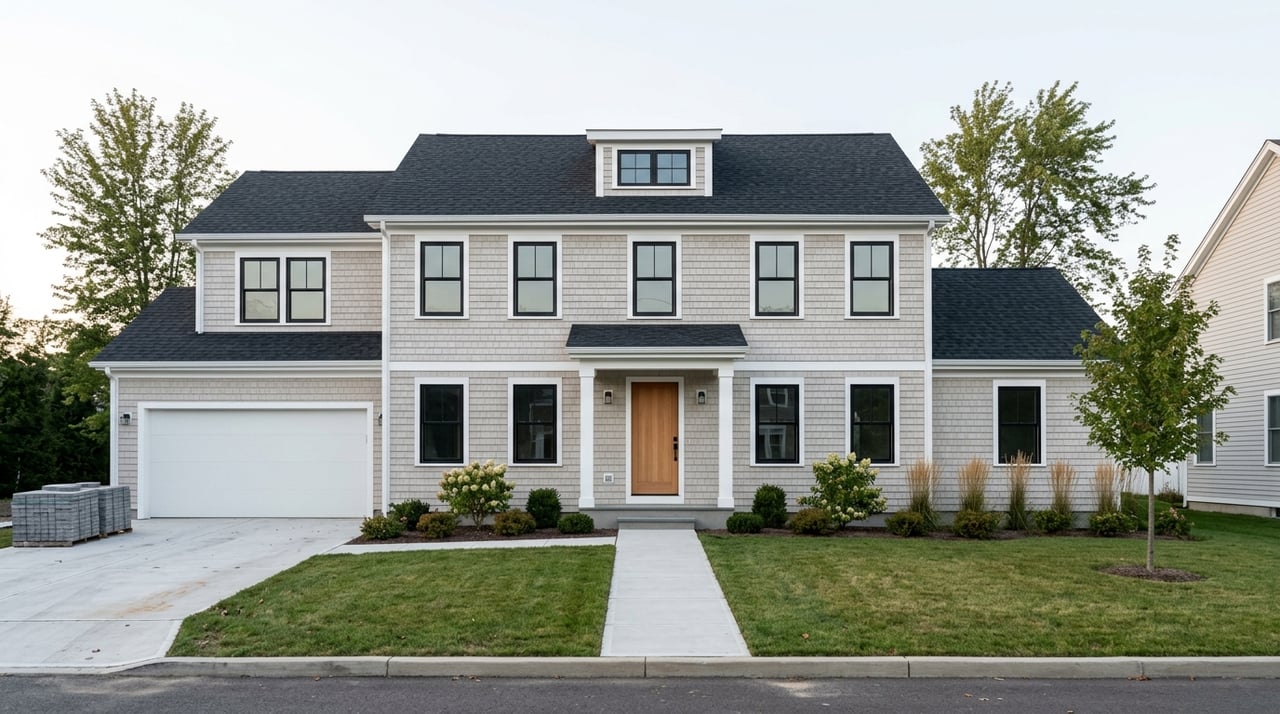
Hanover MA Infill Development Opportunities to Know
May 7, 2026
May 7, 2026
If you are looking at small-scale development in Hanover, the big opportunity is not endless raw land. It is finding the right site, the right scale, and the right plan for a town where land is limited and growth is expected to work alongside open-space protection. Whether you are exploring a small subdivision, an infill build, or an adaptive reuse play, understanding Hanover’s local framework can help you avoid costly missteps and spot the projects with the strongest fit. Let’s dive in.
Hanover is a high-value South Shore market with a 2024 population estimate of 14,887. The town also has an owner-occupied housing rate of 84.5%, a median household income of $189,803, and a median owner-occupied home value of $755,400. Those numbers point to a stable ownership market with strong demand for well-positioned housing.
The local buyer pool is also broad enough to support more than one product type. Census data shows 26.1% of residents are under 18 and 16.1% are 65 or older, which supports demand from both families and older households looking for easier-to-manage homes. In practical terms, that creates room for move-up homes, smaller-lot infill, and age-friendly housing options.
Hanover’s own housing planning adds another key point. The town has identified a need for a wider range of housing alternatives, including options for first-time buyers, young families, seniors, and smaller households. That matters if you are trying to align a project with what the market and the town both say is needed.
Hanover’s planning documents do not point toward broad greenfield expansion. Instead, they emphasize village centers, commercial corridors, infill opportunities, and redevelopment of underused properties. That makes small-scale development more of a precision exercise than a land grab.
The town identifies several village centers, including West Hanover, North Hanover, South Hanover, Assinippi, Hanover Center, and Four Corners. Hanover Center and the Route 53 and 139 intersection are especially important because they already concentrate services, businesses, and traffic. Route 53 is also the town’s most heavily traveled corridor because of its connection to Route 3.
For many buyers and developers, that creates a useful map of where opportunity tends to cluster. Parcels near village-edge locations, Route 53 corridor sites, and scattered infill lots can be more realistic targets than large undeveloped tracts. Hanover’s housing plan also specifically calls out vacant sites, abutters of vacant land, and small town-owned parcels as places where limited new housing may fit.
In Hanover, some of the strongest small-scale opportunities may come from sites that already have some level of service, access, or prior use. The town’s master plan points to adaptive reuse of abandoned, underused, or obsolete properties, including older houses and former commercial or industrial buildings. That approach can add housing without consuming as much new land.
This matters because Hanover’s land-use pattern is already largely established. Single-family properties account for almost half of the town’s land area, commercial and office uses cluster along Route 53, industrial land is limited, and nearly a quarter of the town is tax-exempt, much of it as parks and open space. In a town with those conditions, carefully selected redevelopment sites can offer a more practical path than trying to force a large conventional subdivision.
The open-space plan reinforces that point. It states clearly that land is finite and that growth management and open-space preservation will remain an ongoing challenge. For a small developer or landowner, that makes site efficiency and design discipline especially important.
Before you get too far into pricing or concept plans, Hanover’s zoning and environmental constraints need a close review. This is one of those towns where a parcel that looks promising on paper can quickly become less workable once frontage, wetlands, septic, and overlay districts come into play.
In the Residence A district, the minimum lot size is 30,000 square feet, minimum frontage is 150 feet, and maximum lot coverage is 30%. In several nonresidential districts, including Business, Commercial, Limited Industrial, Industrial, and Fireworks, the minimum lot size is generally 44,000 square feet, with different frontage and coverage standards. Those numbers are your baseline for understanding whether a site may support a by-right concept or require a different approach.
Overlay districts can change the picture just as much as base zoning. Hanover’s Water Resource Protection District overlays other districts, and wetlands resource areas are governed by local conservation rules and state wetlands rules. Flood-plain work may also require Planning Board review with input from the Board of Health and Conservation Commission.
If a parcel falls in the Aquifer Protection Zone, the bylaw adds tighter treatment for lot area and impervious surface. That can affect site yield, layout, drainage assumptions, and the overall economics of a project. In other words, the gross lot size is only the starting point.
On many South Shore sites, septic feasibility is one of the first true go or no-go issues. Massachusetts Title 5 requires local Board of Health involvement for new systems, and the property owner is responsible for compliance. In Hanover, that means septic testing should happen early, before lot release strategies or final pricing assumptions are locked in.
This is especially important on smaller parcels or sites with environmental constraints. A lot that appears buildable from the street may still face limitations based on system design, reserve area needs, or other health and site requirements. If you are underwriting a small development, early septic diligence is not optional.
Hanover also has a current Multi-Family Overlay District under Section 3A, and it deserves careful attention. According to the zoning bylaw, the MFOD is about 71 acres and allows multifamily housing as of right at 15 units per acre. The bylaw also sets standards including 40% maximum lot coverage, 60% minimum open space, and a height cap of three stories or 35 feet.
For the right site, this creates a different path from traditional single-family development. It may support multifamily or mixed-use possibilities that would not be obvious if you only looked at the underlying district. That said, the town page also shows an August 1, 2025 notification of noncompliance and related compliance documents, so current MBTA-related status should be verified as part of underwriting.
The key takeaway is simple. If you are evaluating a site in or near the overlay area, review both the MFOD provisions and the underlying zoning before assuming a special permit path is required.
If your plan involves a subdivision, Hanover’s rules and planning goals suggest that open-space-preserving layouts may be the better fit. The town’s PRDS framework requires at least 20 acres, at least 10 acres outside wetlands and floodplains, at least 5 acres of common open space, and two access roads unless a divided access road is approved.
That is not a simple fit for every landowner. It does, however, align with the town’s master plan, which recommends preserving open space through somewhat higher-density design and natural resource protection approaches. For some sites, a cluster-style concept may fit better than a spread-out conventional layout.
This matters in Hanover because growth is expected to work with the landscape, not against it. A site plan that respects open space, resource areas, and neighborhood context may be more realistic than one built around maximum lot count alone.
Hanover’s housing plan supports a range of unit types, and that should shape small development strategy. The town specifically identifies need across first-time buyers, young families, seniors, and smaller households. It also notes likely demand for smaller, easier-to-maintain units as the population ages.
For project planning, the housing plan gives useful direction on bedroom mix. It suggests one- and two-bedroom units for elderly housing and two- and three-bedroom units for family housing, with some four-bedroom units in family-oriented projects. That does not mean every project should offer every format, but it does show the value of tailoring the mix to likely local demand.
Transportation patterns matter too. Hanover’s plans note that public transportation is otherwise not available in town and pedestrian access is limited by lower density and distance between homes and services. For many buyers, practical features like garage space, driveway function, and commute access may carry more weight than walkability claims.
Even a well-located site can underperform without the right release and communication plan. Hanover’s housing plan says the town will need partnerships with developers and lenders to produce new units, and that much of the production will require joint ventures with developers. That makes the sales process part of the project strategy, not just the final step.
For small-scale developments, phased releases can help match absorption to local demand. They can also make a project feel more incremental and connected to the existing town pattern, especially in village-centered or infill settings. In a market like Hanover, that can reduce the risk that a project feels oversized or speculative.
If a project includes deed-restricted units intended for the Subsidized Housing Inventory, the process becomes even more structured. Hanover’s housing plan notes that Massachusetts requires affirmative fair marketing and lottery procedures for units counted on the SHI, along with affordability restrictions and a request for new-unit credit. That is another reason to build your marketing and compliance approach early.
If you are sizing up a parcel in Hanover, start with a disciplined screening process:
Hanover’s GIS tools can also help with early parcel review because the town’s mapping resources show approximate wetlands, parcels, buildings, and aquifer protection information, along with links to zoning and flood resources. That first-pass review can save time before you move into detailed engineering and legal analysis.
Hanover offers real opportunity for small-scale development, but it rewards precision more than volume. The strongest projects are likely to be infill on already served parcels, adaptive reuse of underused property, thoughtfully designed small subdivisions, and corridor or overlay-driven development near Route 53 and village-centered planning areas. In each case, success depends on whether the project fits the town’s land-use pattern, environmental constraints, and buyer demand.
For buyers, builders, and landowners, that means a clear process matters. You need realistic site screening, careful phasing, and a sales strategy that supports reservations, buyer communication, and project momentum from the start. If you want experienced local guidance on Hanover land, new construction positioning, or subdivision sales strategy, connect with Newcon RE LLC.
Stay up to date on the latest real estate trends.

June 25, 2026
June 18, 2026
June 11, 2026
June 4, 2026
May 28, 2026

May 21, 2026
May 14, 2026
May 7, 2026
April 23, 2026
For the best service and results when it comes to all of your real estate needs, reach out anytime.