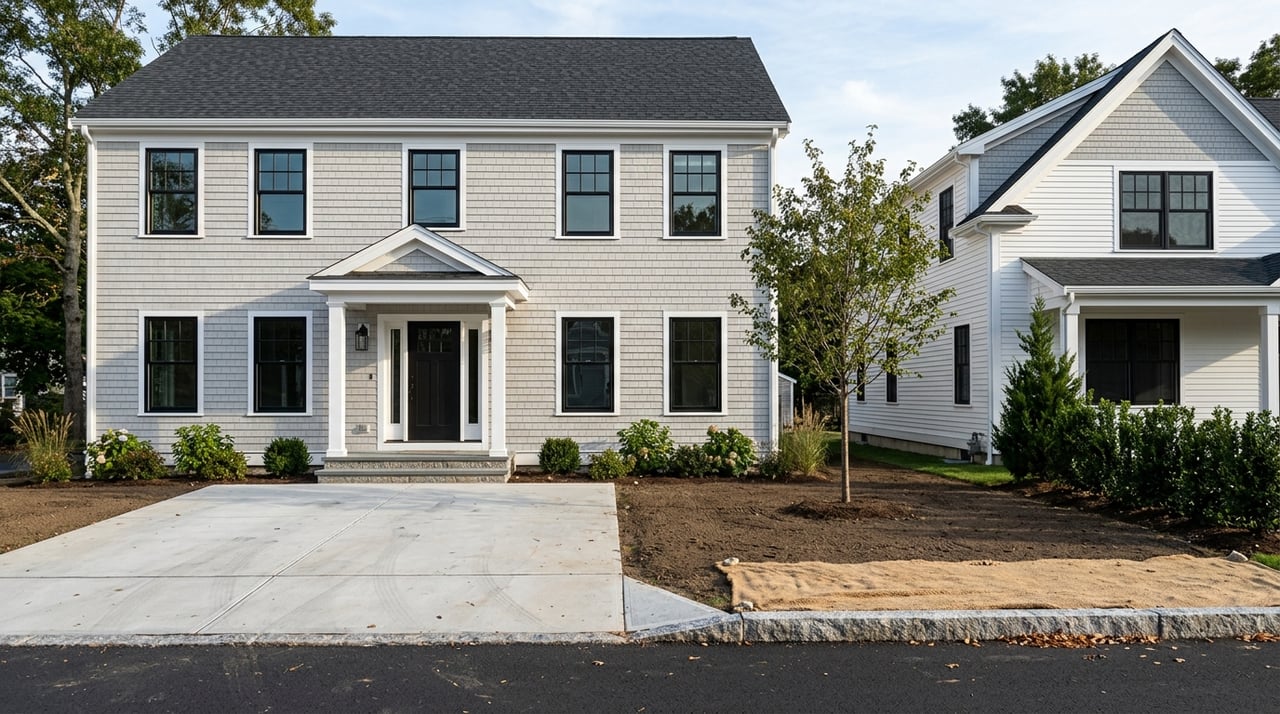
Subdivision Sales Strategy For Scituate Builders
June 18, 2026
June 18, 2026
If you are planning a subdivision launch in Scituate, a strong market alone is not enough. Buyers may move quickly here, but your sales pace still depends on approvals, site conditions, lot sequencing, and how clearly you communicate each milestone. When those pieces line up, you can protect margins, reduce friction, and create a smoother experience for everyone involved. Let’s dive in.
Scituate is a small coastal town with a relatively affluent buyer base and a high owner-occupied housing rate. The U.S. Census estimated the population at 19,598 in July 2024, with median household income of $136,732 and per-capita income of $84,308. That creates a market where buyers often expect strong build quality, thoughtful layouts, and a polished buying experience.
The pricing backdrop supports that position, but it also calls for discipline. Redfin reported a median sale price of $919,450 for the three months ending May 2026, while Realtor.com reported a median listing price of $1.395 million in March 2026. Those figures show pricing strength, but they also remind you that list prices and closed sales are not the same thing.
For builders, that gap matters. If your first phase is priced too aggressively, you can slow absorption before the project has earned momentum. In a market like Scituate, a measured launch often performs better than a fast, top-of-the-range opening.
Scituate's housing and demographic data suggest a buyer pool that is not one-size-fits-all. The town's 2025 Housing Production Plan notes an aging community, declining younger cohorts, and a need for starter homes, downsizing options, and appropriately sized units. That means your subdivision strategy should think beyond one single household type.
In practical terms, the strongest demand may come from a mix of move-up buyers, empty nesters, and local returnees. Some will want larger homes with premium finishes, while others may care more about efficient layouts and manageable upkeep. A floorplan mix that reflects this range can help widen your buyer pool without diluting the brand of the community.
That is especially important in a town where affordability remains a real issue. The Housing Production Plan estimated a median single-family home price of $888,000 at the end of 2024 and identified an affordability gap of roughly $350,000 for median-income households. For your project, that makes home size, lot premiums, and included features central to the sales strategy.
In Scituate, the launch schedule is shaped by municipal process as much as market timing. The Planning Board handles divisions of land for new buildable lots, ANRs, site plans, minor and major subdivisions, and stormwater permits. The town states that applications are scheduled only when required forms, plans, and fees are complete.
Timing details matter here. Materials for a Planning Board meeting must be submitted by noon one week before the meeting, and larger projects need to be filed early enough for peer review to be completed a week before the scheduled meeting. If your marketing plan assumes a go-live date before those milestones are secure, you risk creating avoidable buyer frustration.
The town's subdivision rules are also clear that a developer should not move into lot sales, road work, or municipal-service installation before approval. The rules state that anyone dividing or subdividing land must submit a plan and secure approval before proceeding with improvements or lot sales. They also note that the Building Inspector cannot issue a permit unless the lot is outside a subdivision or shown on a recorded plan with access and required conditions satisfied.
Scituate's coastal geography can add real complexity to a subdivision launch. The Conservation Commission administers the Wetlands Protection Act and the local bylaw, with jurisdiction over coastal banks, dunes, beaches, salt marshes, flood plains, barrier beaches, and 100-foot buffer zones. The town also requires a permit for land alterations in a special flood hazard area.
The town's flood information notes that nor'easters cause most of the flood hazard in Scituate. For waterfront-adjacent or low-lying parcels, that means early diligence is not optional. It should shape your timeline, your engineering assumptions, and the order in which you release lots.
Utilities can be just as important. MassDEP's Title 5 program governs septic systems, and Scituate's housing plan identifies limited sewer service and water-capacity issues as major development constraints. If septic, drainage, or utility reviews are likely to affect certain lots, that should be reflected in your launch calendar from day one.
A subdivision strategy works better when lot planning and product planning happen together. Scituate's zoning FAQ states that R-1 requires 40,000 square feet of upland and 100 feet of frontage, R-2 requires 20,000 square feet and 100 feet of frontage, and R-3 requires 10,000 square feet and 100 feet of frontage. Those standards directly affect what can be built and how lots should be positioned in the sales rollout.
This is why a one-size-fits-all release plan rarely works. Your lot sizes, home designs, and pricing ladder should reflect the actual district rules and any site-specific constraints. The most successful launches are usually the ones that treat entitlement, design, and sales as one coordinated system.
If the project uses Flexible Open Space Development, the town requires at least 30% of the parcel to be permanently protected as open space and prohibits further subdivision of those lots. That can be a meaningful feature in buyer marketing, but it must be accounted for before the first reservation is taken. It affects lot count, plan layout, and how the community is presented from the start.
Scituate's market conditions support a phased release strategy. Redfin's reported 19-day average sale pace and Realtor.com's seller-market read suggest that well-positioned homes can move quickly. That makes it tempting to release everything at once, but in a permit-heavy environment, that approach can create unnecessary risk.
A better model is usually to release the cleanest and easiest-to-permit lots first. Start with lots that have the least permitting friction, the clearest access story, and the most straightforward utility path. This gives the project an early win and creates room to price later phases with more confidence.
The model or showcase home should also be chosen carefully. In many cases, the best placement is the lot with the strongest curb appeal and the fewest approval complications. When buyers can see visible progress early, reservations often feel safer and the overall community becomes easier to sell.
In a premium town, pricing discipline protects more than just sales pace. It also protects credibility. Because Scituate's listing and sale data show a meaningful spread, early pricing should be grounded in actual absorption strategy rather than just headline market optimism.
A cautious first-phase price ladder often makes the most sense. You can establish traction, collect buyer feedback, and prove the value of the location, product, and finish level before pushing prices higher in later releases. That approach is usually more defensible than opening at the ceiling and hoping the market catches up.
Lot premiums deserve the same level of care. View corridors, privacy, easier topography, and simpler build paths may all justify price differences, but those premiums need to feel logical to buyers. Clear positioning tends to convert better than overly complicated pricing.
A subdivision launch in Scituate is not just a sales task. It is a communication task. The town's planning and permitting process is public, and the Building Department states that permit applications are handled online with plans and supporting documents uploaded through the portal.
That public, document-heavy environment means buyers can sense when a project is moving and when it is stalled. The sales process works best when you give them a steady cadence of updates rather than leaving them to fill in the blanks. Consistent communication builds trust and lowers the anxiety that often comes with new construction.
A practical update rhythm can include:
This kind of structure aligns well with the process discipline Scituate demands. It also fits the expectations of buyers who want transparency during a long build cycle.
Scituate's subdivision rules create milestone points that should be reflected in your sales management. Before town acceptance, water and sanitary sewer lines must be tested to the satisfaction of the Director of Public Works, and as-built plans are required at the end of construction. The rules also allow the Board to use technical assistance and professional review at the applicant's expense.
For you, that means budgets and schedules should include room for review cycles, revisions, and consultant timing. It also means reservation workflows, contract timing, and closing expectations should be tied to actual project milestones. When the process is managed clearly, you reduce surprises for buyers and protect the project's reputation.
This is where an experienced new-construction sales team adds value. A disciplined partner can track reservations, pricing, build progress, and buyer communication in one place, helping the launch stay organized as approvals and construction move forward.
The strongest subdivision launches in Scituate are rarely the loudest. They are the ones that align product mix, approvals, flood and utility diligence, phased lot releases, and steady buyer communication. In this market, success comes from coordination, not just demand.
If you are preparing to bring a Scituate subdivision to market, the goal should be simple: release the right lots at the right time, price them with discipline, and keep buyers informed from reservation through closing. That is how you create momentum without sacrificing control.
If you want a process-driven partner for a Scituate launch, Newcon RE LLC can help you plan lot releases, buyer communication, and new-home sales with the transparency and structure today’s market demands.
Stay up to date on the latest real estate trends.
October 22, 2026
October 15, 2026
October 8, 2026
October 1, 2026
August 27, 2026
August 20, 2026
August 13, 2026

August 6, 2026
August 6, 2026
For the best service and results when it comes to all of your real estate needs, reach out anytime.